
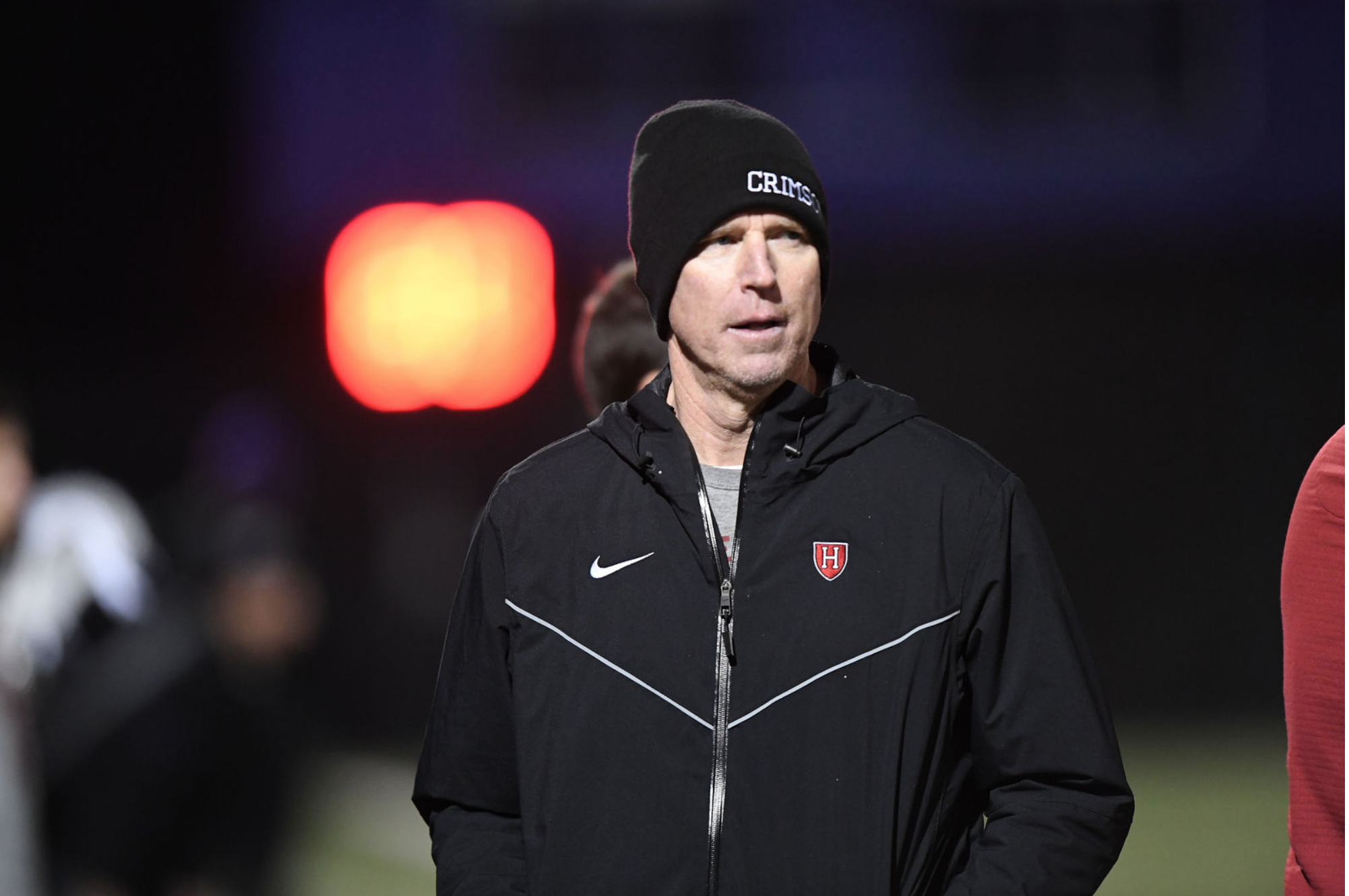
Gerry Byrne stood unfazed as Harvard remained tied with Syracuse late in the fourth quarter. While fans and players could feel the tension, the head coach watched from the sideline with the same calm he has carried through every rebuild, every fourth‑quarter deficit and every season-defining moment.
What unfolded next—John Aurandt finding Nathan Cobery for the game-winner against the No. 1 team in the nation—felt more like a confirmation than a surprise. It was exactly the kind of patient, unselfish possession that Byrne spent countless hours trying to teach.
“There was no panic in the huddle,” Byrne said afterward. “We had been there and come back from games in the fourth quarter dozens of times.”
Broadcaster and sideline reporter Giovanni Culotta refers to Byrne’s style as “aggressive patience”—a balance between remaining calm and waiting for the right moment, while still applying constant pressure.
Moments like that have come to define Byrne’s teams. Harvard’s 8-0 start—its best since 1961—has shocked many on the outside, but for Byrne, it was bound to happen eventually.
“I think all of the teams that I’ve coached here have had the capability to be in this moment,” he said. “It happens at its own time.”
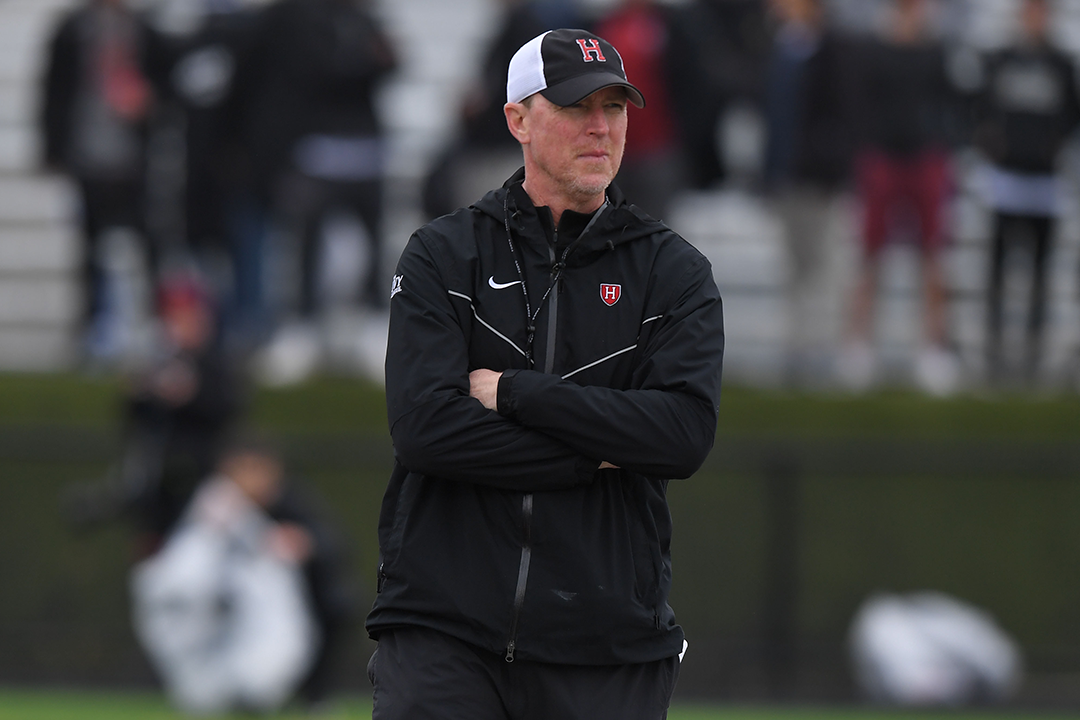
Culotta still remembers his first interaction with Byrne. At first glance, the coach appeared imposing—straight-faced, hood up and fully locked into the moment.
Once they spoke, his impression shifted. He was warm and conversational, asking Culotta about his background and personal life.
“He looks like he’s mad, and then you say something funny and his face lights up,” Culotta said.
Byrne’s mindset can be traced back to Levittown, New York—a “blue‑collar epicenter” of lacrosse on Long Island. But the real force shaping Byrne wasn’t geography; it was his older brother, Steve.
“He had always been my hero,” Byrne said.
The age gap meant Byrne was always chasing something just out of reach. By the time he was halfway through high school, Steve was an All‑American at the University of Virginia. The standard was impossibly high, and Byrne worked tirelessly to meet it.
He played collegiately as a defenseman at UMass Amherst, professionally in both the National Lacrosse League and Major League Lacrosse and chased a spot on the U.S. national team.
“A lot of my time in college and after college was almost chasing the legacy of my older brother, who I loved, but was also competing with,” he said.
However, Byrne’s ambitions with the sport eventually took a new form, rooted in a desire to mentor the next generation of players. That calling led him to the sidelines of the game he loved—first at Souhegan High School, then at St. Anselm College and Notre Dame, and ultimately to Harvard in 2019.
It didn’t take long for players like Sean Jordan, a senior captain for the Crimson, to recognize what set Byrne apart: his transparency.
“He let me and every other guy in our class know that if you’re going to come to Harvard, it’s going to be difficult building this program,” Jordan said.
Byrne didn’t promise shortcuts or instant success; he laid out a long, demanding climb and asked players to buy into it anyway.
Early on, Byrne realized there were limits to what he could control as he attempted to reshape a historically struggling program.
“When you’re a coach, you’re 30 yards away from the action pretty consistently,” he said, “So there’s an element of powerlessness that you feel.”
Instead, he built a philosophy around the things he could control. Byrne treats practice with a deliberate intensity, determined to enter gameday knowing he did everything he could to prepare his team.
“Even the walkthroughs are meticulous,” Jordan said.
When Byrne first took control of the program, the most important lesson in practice was learning how to remain competitive in the fourth quarter.
This philosophy is evident to Culotta as well. During the Dartmouth game, he saw it in the way Teddy Malone’s teammates swarmed him after his 100th career goal, turning what could have been an individual milestone into a shared moment.
This, as much as any win, is Byrne’s impact. While the undefeated start is meaningful, that excitement is only temporary.
“In the moment, it’s a very cool thing to do this for the first time in over 60 years,” he said, “But by the time you leave the locker room after the game, you’re already thinking about your next opponent.”
Regardless of the team’s record, the process remains the same. When the next close game comes, the Crimson will return to what Byrne has preached since the day he arrived: trust, discipline and composure.
It’s who he is. Now, it’s what Harvard lacrosse is becoming.